
Oral Hygiene Basics
Discover the essentials of maintaining a healthy smile.
Oral Hygiene Basics
Good oral hygiene is the foundation of a healthy and confident smile. Maintaining proper dental care habits helps protect your teeth and gums from common oral health problems such as cavities, gum disease, and bad breath. A consistent daily routine that includes brushing, flossing, and using the right dental products plays a key role in keeping your mouth clean and healthy. In addition, regular dental checkups and professional cleanings allow your dentist to detect potential issues early and ensure your oral health stays on the right track. By prioritizing good oral hygiene every day, you can enjoy stronger teeth, healthier gums, and a brighter smile for years to come.
Why Oral Hygiene Is Important
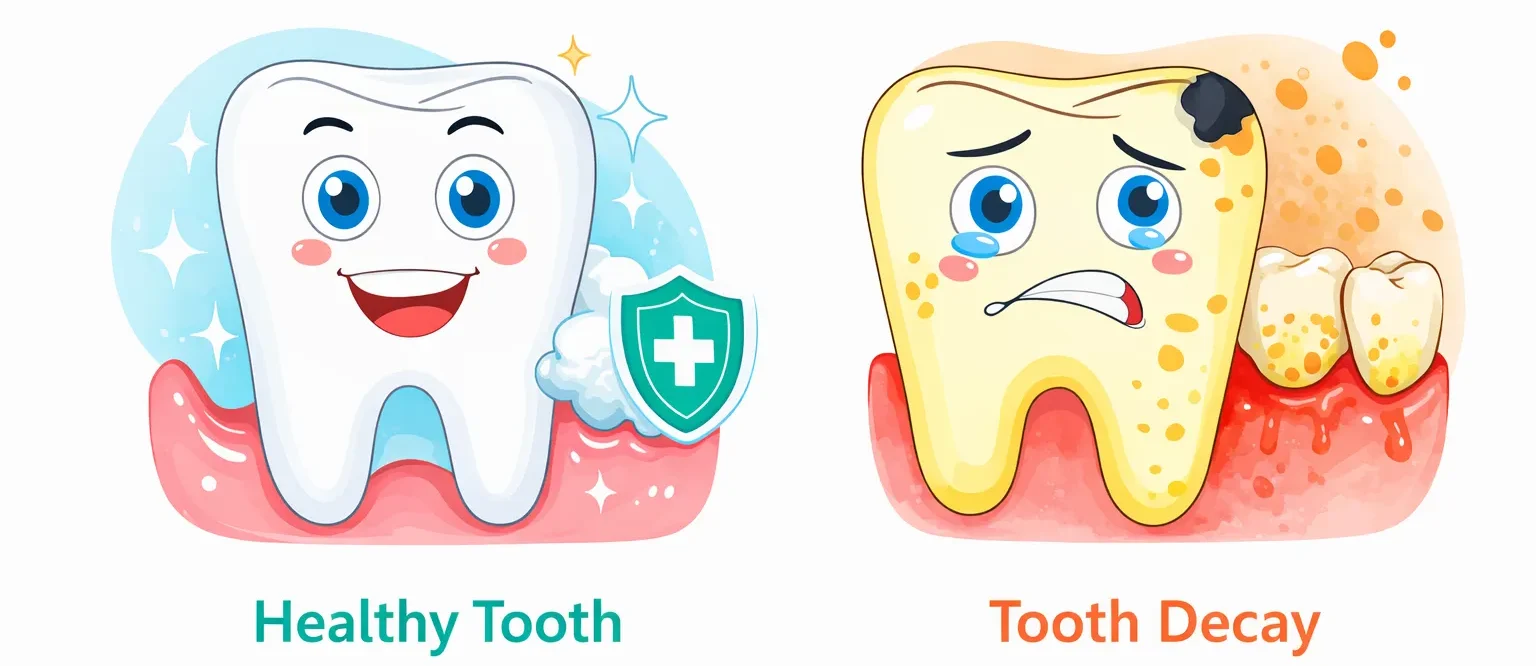
Good oral hygiene is essential not only for keeping your teeth clean but also for preventing a variety of common dental problems. When proper dental care is neglected, plaque and harmful bacteria can build up on the teeth and gums, increasing the risk of tooth decay, gum disease, and persistent bad breath. Maintaining a consistent oral care routine plays a key role in preserving long-term dental health..


Benefits of good oral hygiene include:
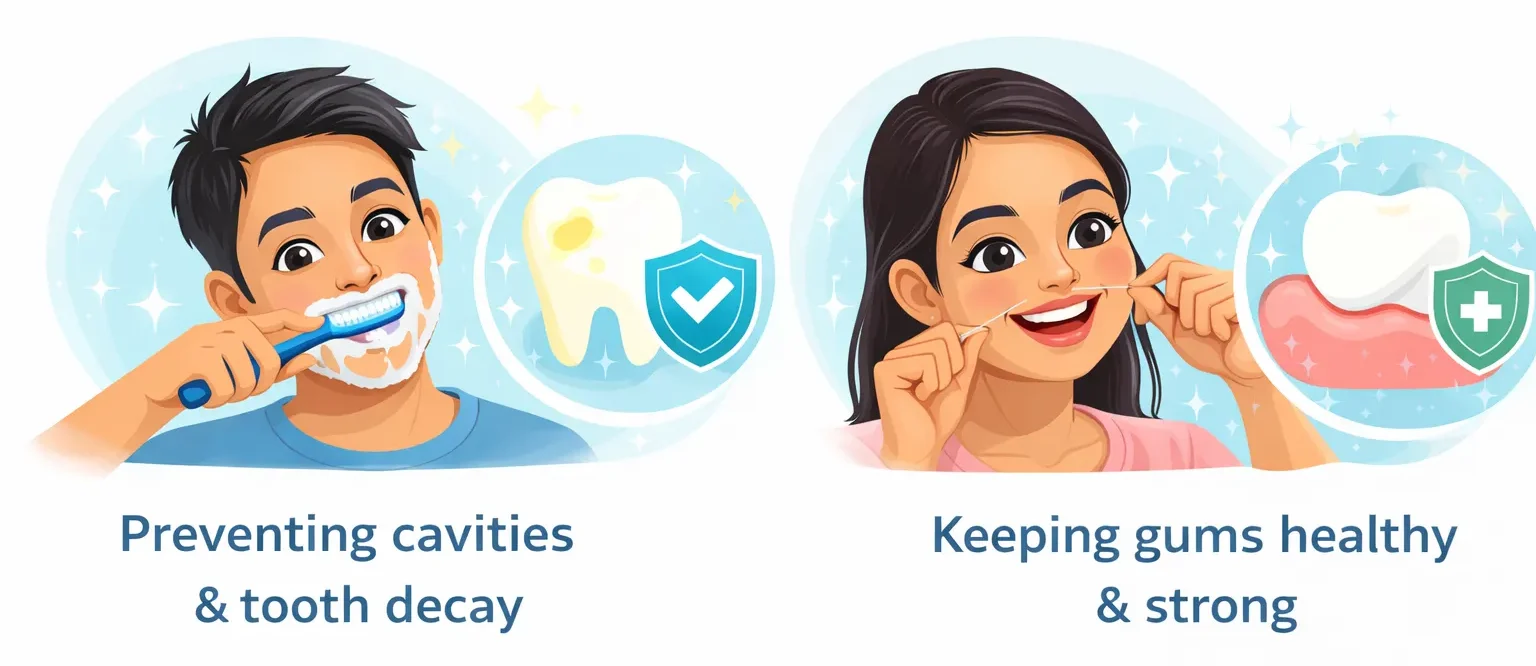
- Preventing cavities and tooth decay
- Keeping gums healthy and strong
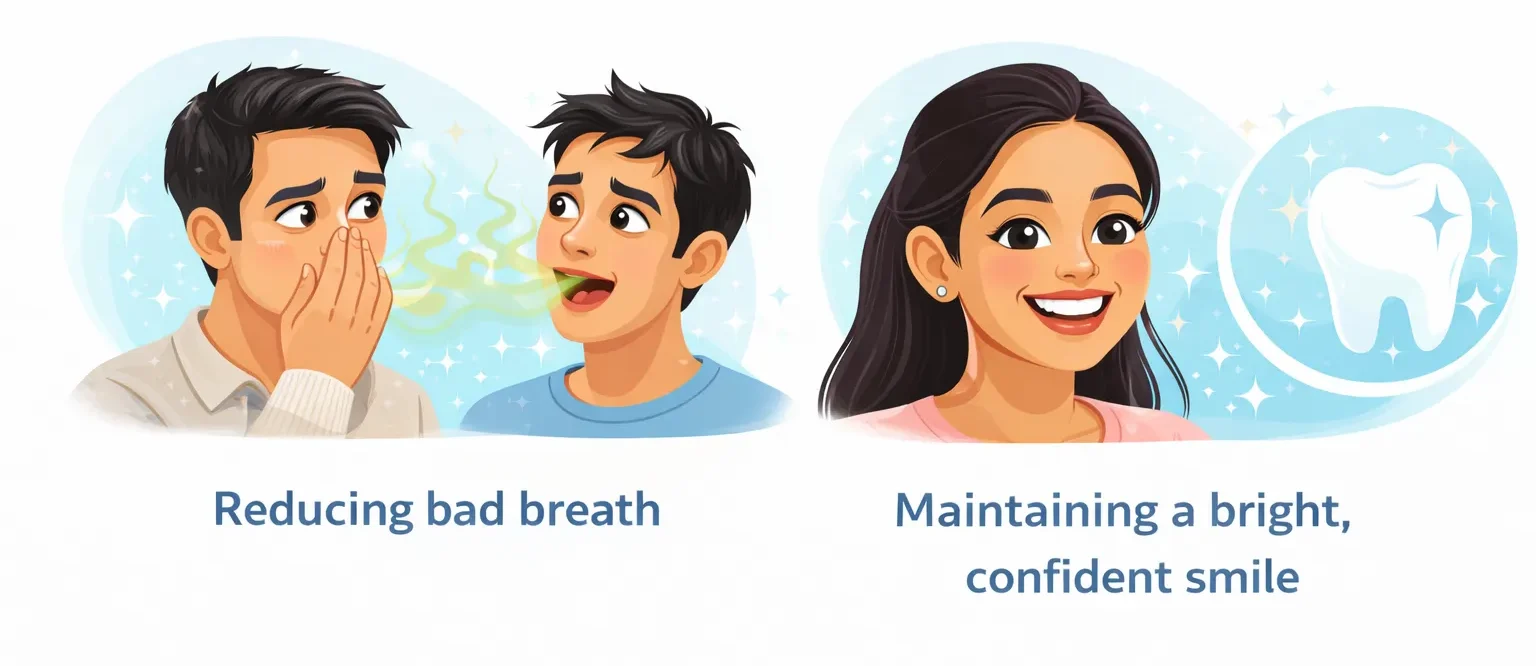
- Reducing bad breath and improving freshness
- Maintaining a bright and confident smile
- Supporting overall oral health and well-being
Daily Oral Care Essentials

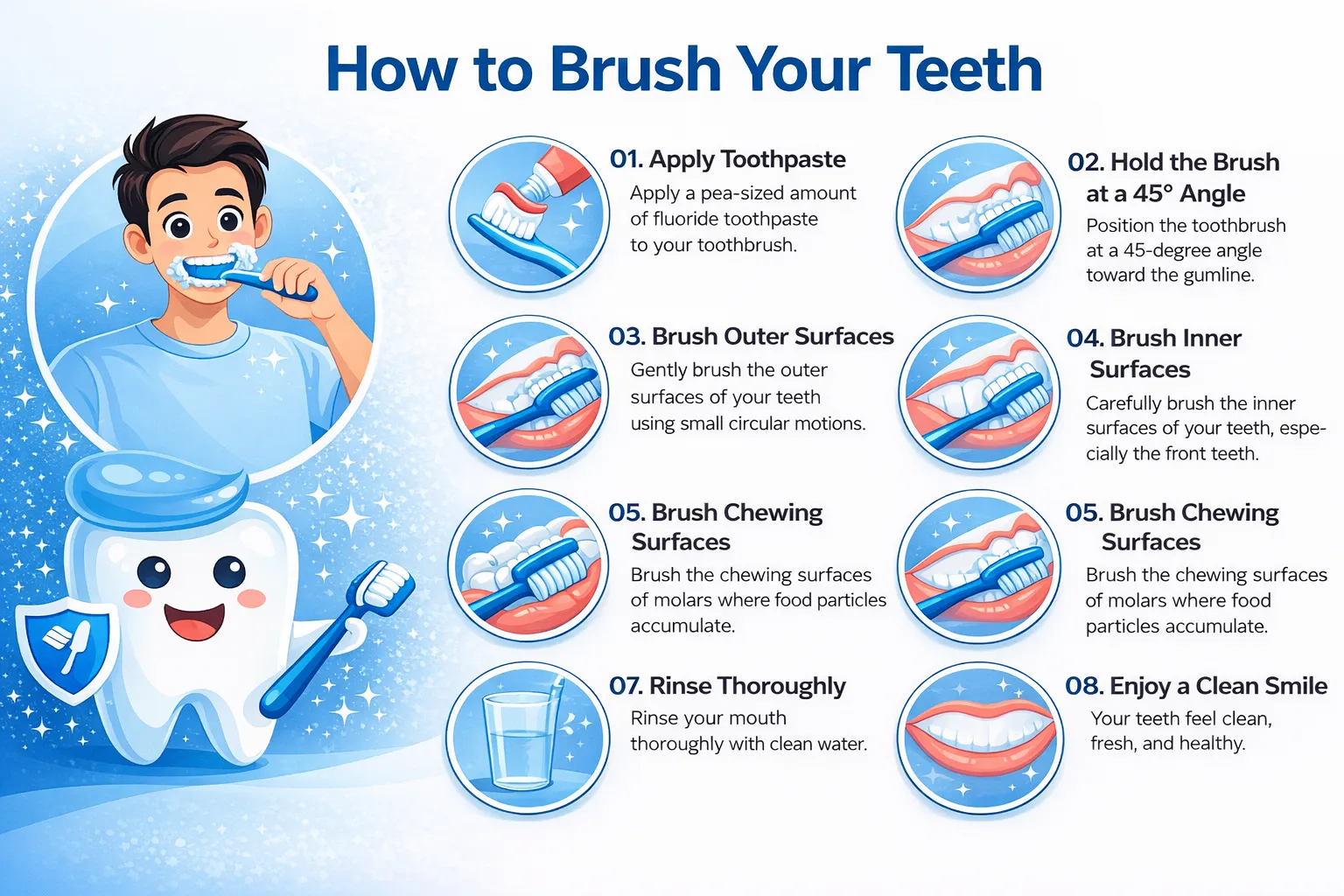
Brush your teeth twice daily with fluoride toothpaste to remove plaque and maintain clean, healthy teeth.

Floss daily to remove plaque and food particles between teeth and support healthy gums.

Use an antibacterial mouthwash to reduce bacteria, freshen breath, and enhance your daily oral care routine.
Frequently Asked Questions
Everything you need to know before and after your dental treatment.
Why is oral hygiene important?
Good oral hygiene helps prevent cavities, gum disease, and bad breath while keeping your teeth and gums healthy.
When should I use mouthwash?
Mouthwash can be used after brushing and flossing to help reduce bacteria and freshen breath.
Is flossing really necessary?
Yes, flossing removes plaque and food particles from between teeth where a toothbrush cannot reach.
How often should I replace my toothbrush?
You should replace your toothbrush every 3–4 months or sooner if the bristles become worn.
How can I book an appointment?
You can schedule your appointment online at dentalplusdelhi.com/make-an-appointment, or reach us by calling 040‑4142 0000 or via WhatsApp at 8500779000 for quick assistance.
Can poor oral hygiene affect overall health?
Yes, poor oral hygiene may increase the risk of gum disease and has been linked to other health conditions.
What are the signs of poor oral hygiene?
Common signs include bad breath, bleeding gums, plaque buildup, tooth sensitivity, and cavities.
What type of toothbrush is recommended by dentists?
Dentists usually recommend using a soft-bristled toothbrush to clean teeth effectively without damaging the gums.
What safety measures are in place at Dentalplusdelhi?
Dentalplusdelhi adheres to the highest standards of clinical safety, including:
Advanced dental disinfection protocols
Class B autoclave sterilization
Use of disposable dental kits and PPE
HEPA air purification systems
Regular sanitization of treatment areas
Contactless check-in and digital records management
Your safety is our top priority at every stage of your visit.
What are Partha Dental clinic timings?
All Partha Dental clinics operate 7 days a week, from 9:00 AM to 9:00 PM, ensuring convenient access for all patients.