Braces Treatment
Small Brackets, Big Transformation.
What are Dental Braces?
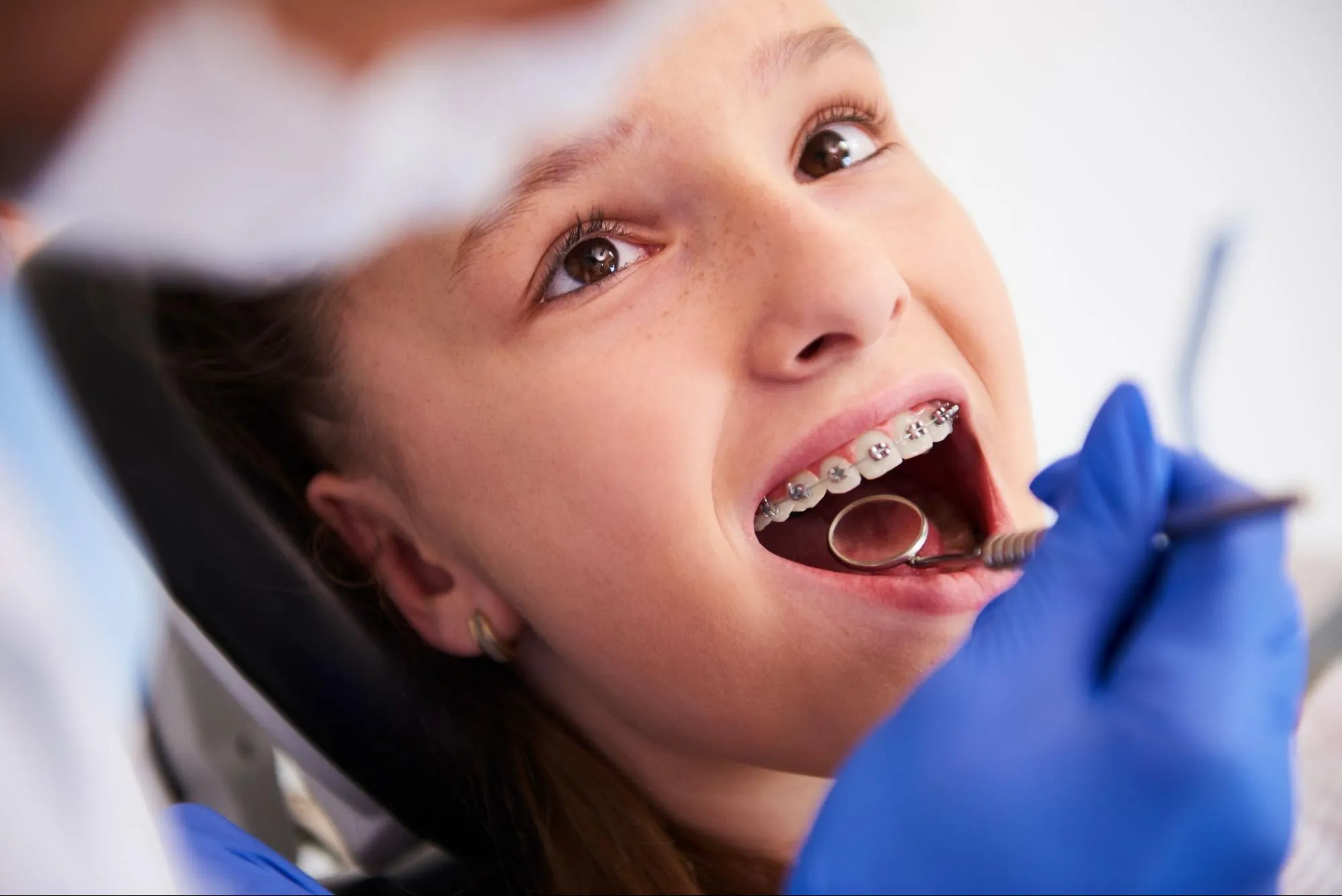
Dental braces are orthodontic appliances used to gradually move teeth into their correct position and alignment. They consist of small brackets attached to the teeth, connected by a thin archwire that applies gentle, continuous pressure to guide teeth into a healthier and more balanced arrangement over time.
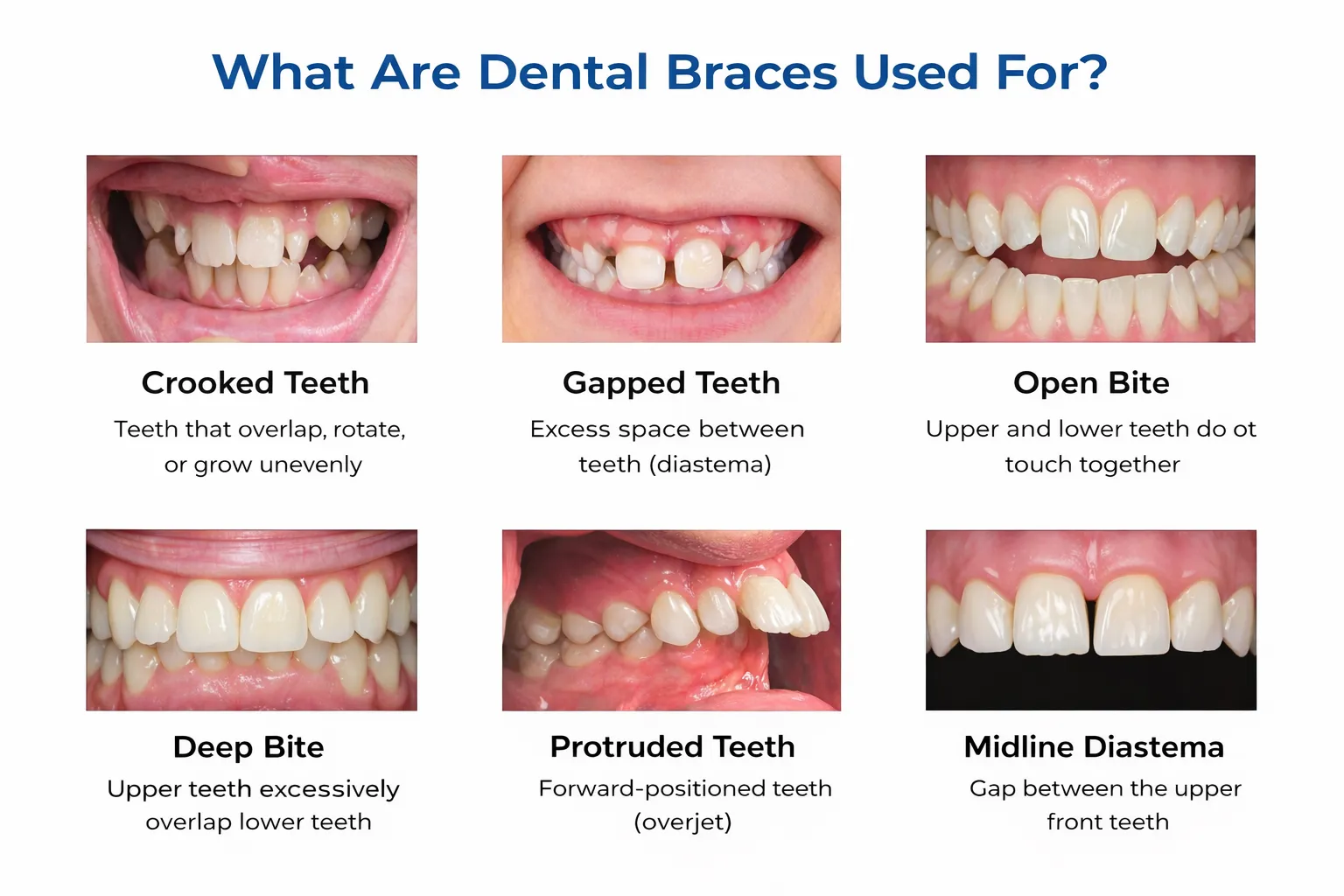
Braces are recommended to correct issues such as crowded teeth, spacing, protruding teeth, and improper bite relationships (overbite, underbite, crossbite, or open bite). By improving the way the upper and lower teeth fit together, orthodontic treatment enhances both the appearance of the smile and overall oral function.
Properly aligned teeth are easier to clean, reducing the risk of tooth decay, gum disease, and abnormal tooth wear. In addition to aesthetic improvement, braces contribute to better chewing efficiency, clearer speech, and long-term dental stability.
Modern orthodontic braces are safe, effective, and suitable for children, teenagers, and adults, with treatment plans customized according to each patient’s dental condition and goals.
Types of Dental Braces
Modern orthodontics offers several types of braces to suit different dental conditions, age groups, and aesthetic preferences. After a detailed examination, the orthodontist recommends the most appropriate option based on alignment complexity, lifestyle, and treatment goals.
Metal Braces (Conventional Braces)
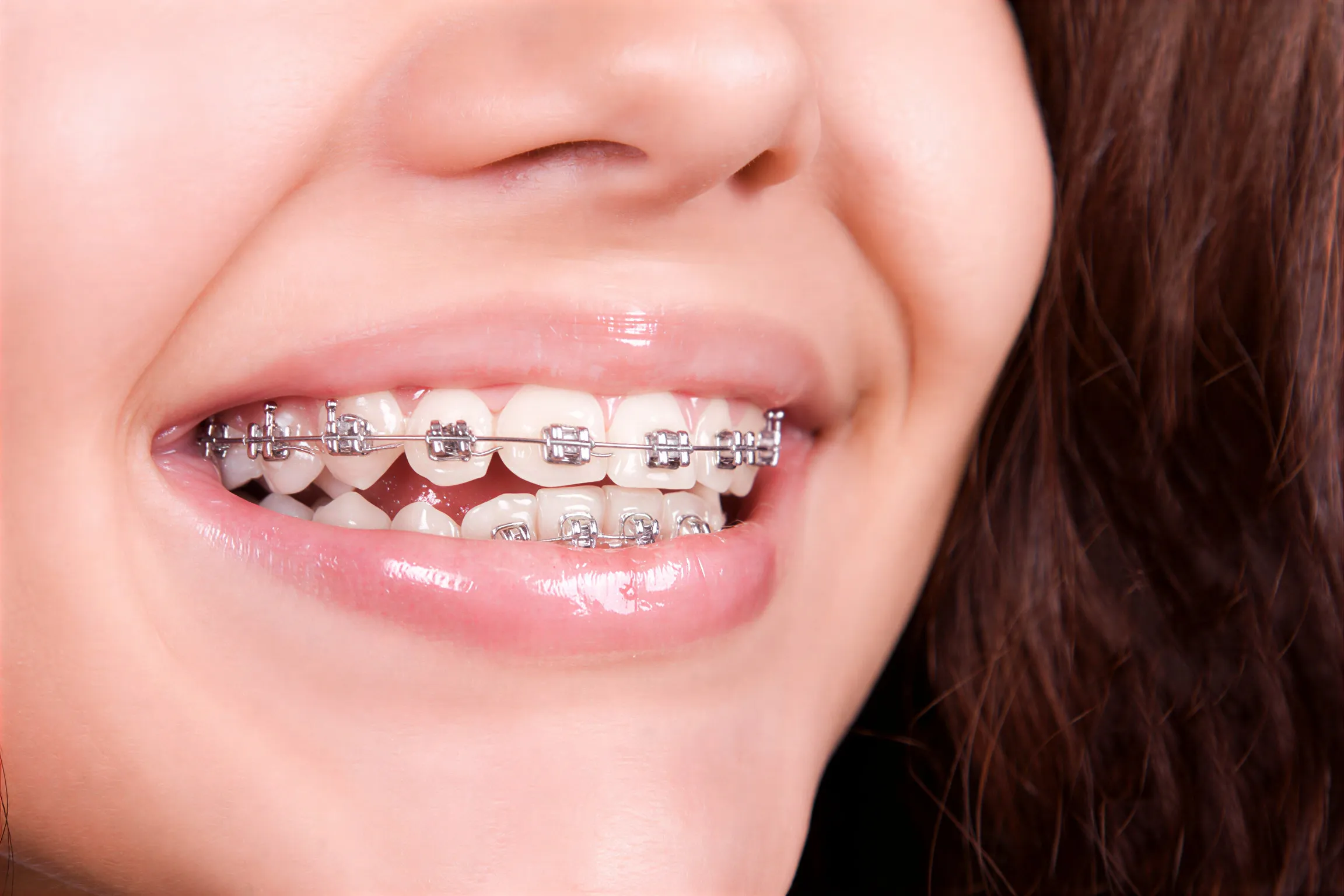
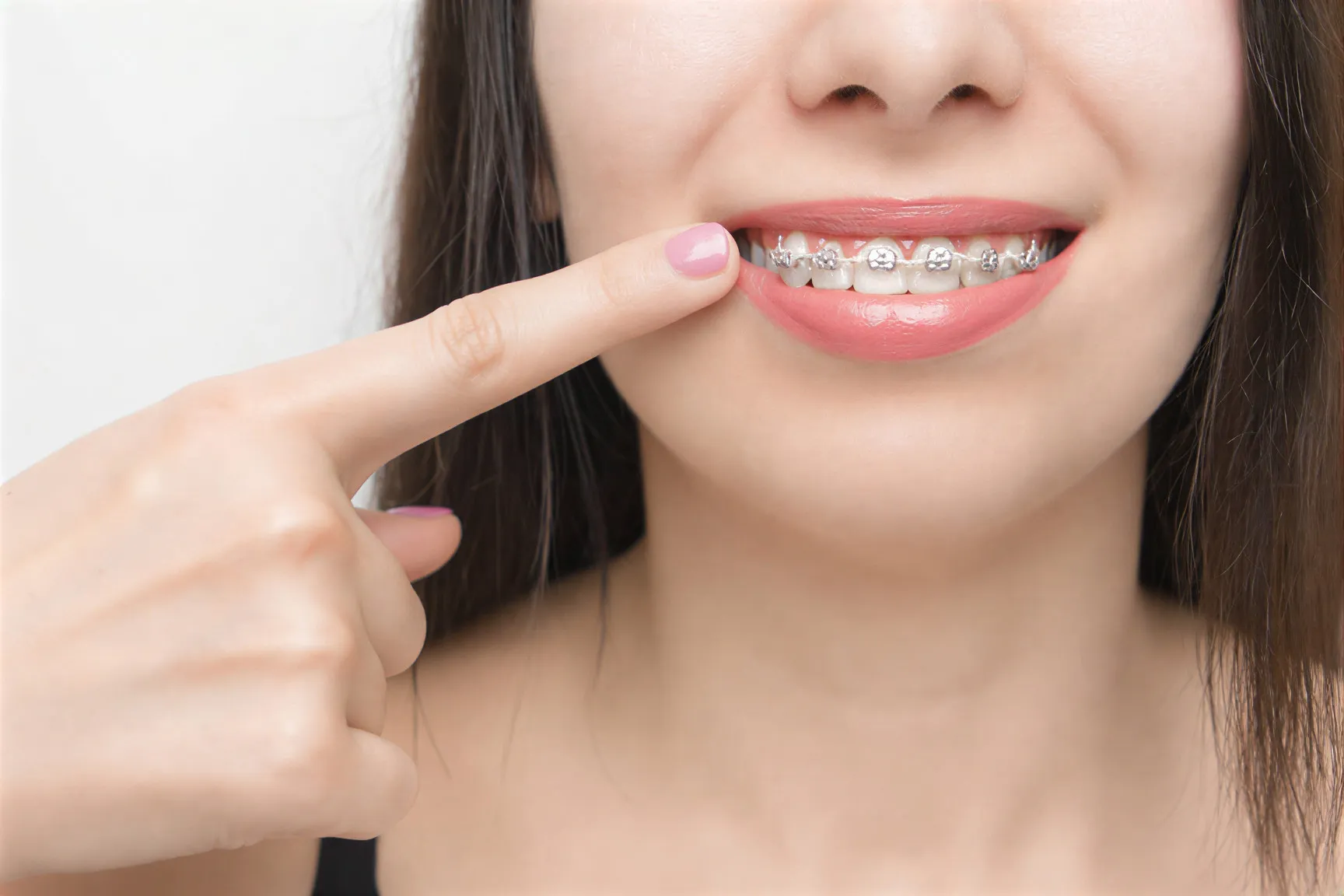
Metal braces are the most commonly used orthodontic appliances. They consist of stainless-steel brackets attached to the teeth and connected with an archwire that gradually moves teeth into proper alignment.
Best for: Moderate to severe misalignment
PROS:
- They are an effective treatment for tough cases.
- They are affordable and durable.
- Very effective for all alignment problems
CONS:
- Clearly visible on teeth
- Mild initial discomfort.
- Needs careful cleaning and regular visits
Ceramic Braces (Tooth-Colored Braces)
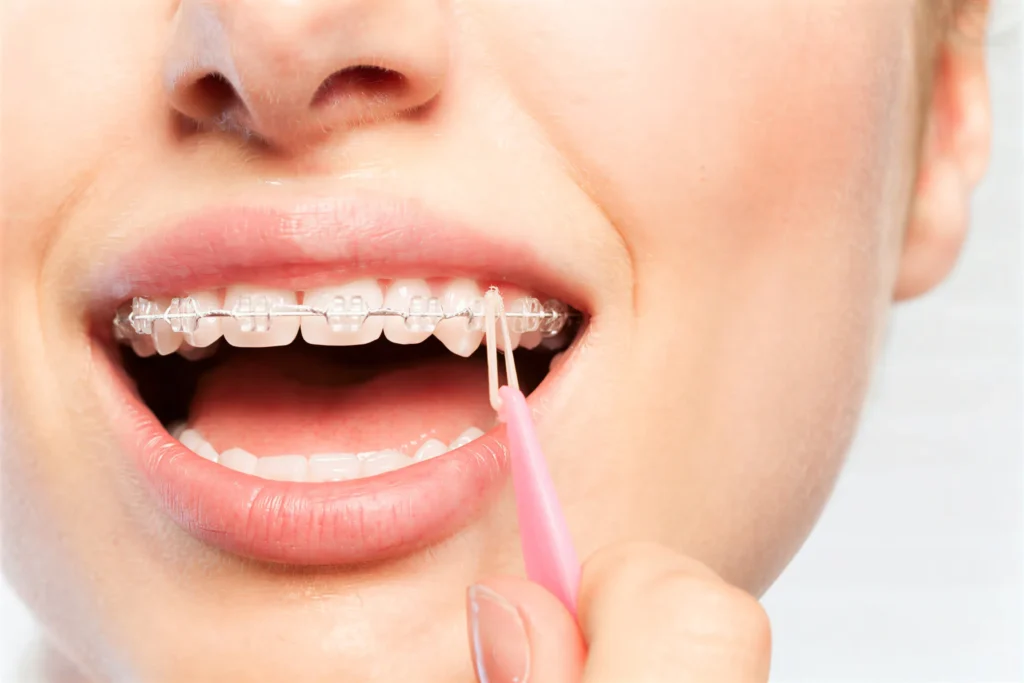
Like traditional braces, they rest on the front of the teeth, but because they are constructed of tooth-colored ceramic material, they blend in a little better. They function just as quickly and effectively as metal braces.
Best for: Teenagers and adults concerned about appearance
PROS:
- Braces made of ceramic are far less obvious than metal ones.
- Effective for mild to moderate alignment problems
- Comfortable and smooth brackets
CONS:
- More expensive than metal braces
- Brackets can stain if oral hygiene is poor (tea/coffee, smoking)
- Slightly more fragile than metal braces
Self-Ligating Braces
Self-ligating braces are advanced orthodontic braces that use a special built-in clip or sliding mechanism to hold the archwire in place instead of elastic rubber bands (ligatures). This design allows the wire to move more freely, creating less friction and enabling smoother, more efficient tooth movement.
Best for: Patients seeking quicker and more comfortable treatment
PROS:
- Less friction and smoother tooth movement
- Fewer clinic visits and shorter adjustment appointments
- Easier to clean due to absence of elastic bands
CONS:
- Still slightly visible (especially metal type)
- More expensive than traditional metal braces
- Needs careful cleaning and regular visits
Lingual Braces
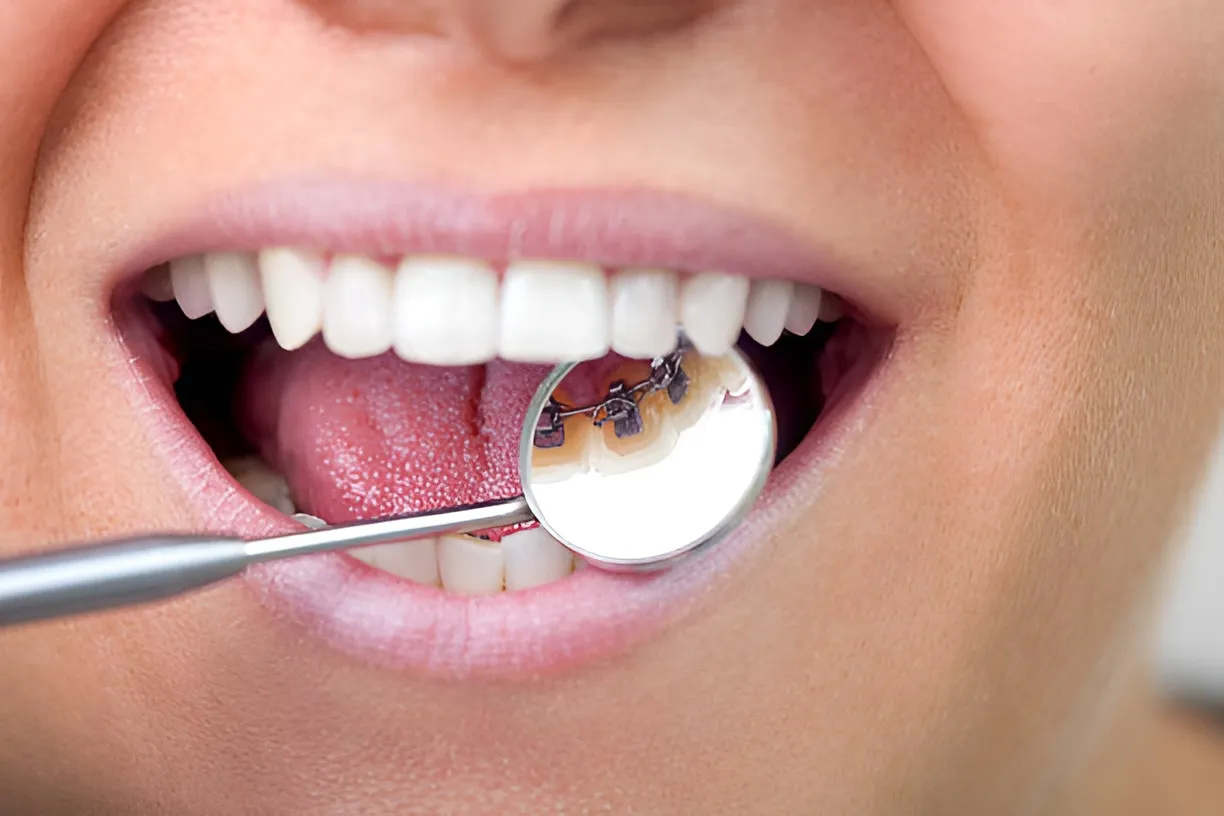
Lingual braces are fixed orthodontic appliances attached to the inner (tongue-side) surface of the teeth, so they are not visible while smiling or talking. They function like traditional braces, using brackets and archwires to gradually move teeth into proper alignment and improve the bite.
Best for: Professionals such as teachers, models, or public speakers
PROS:
- Virtually invisible from the front
- No impact on smile appearance during treatment
- Suitable for patients concerned about aesthetics
CONS:
- Temporary speech difficulty in initial days
- Slight tongue irritation or soreness at first
- More expensive than traditional braces
Procedure for Braces

The orthodontist examines your teeth and bite, and records are taken using photographs, X-rays, or digital scans.
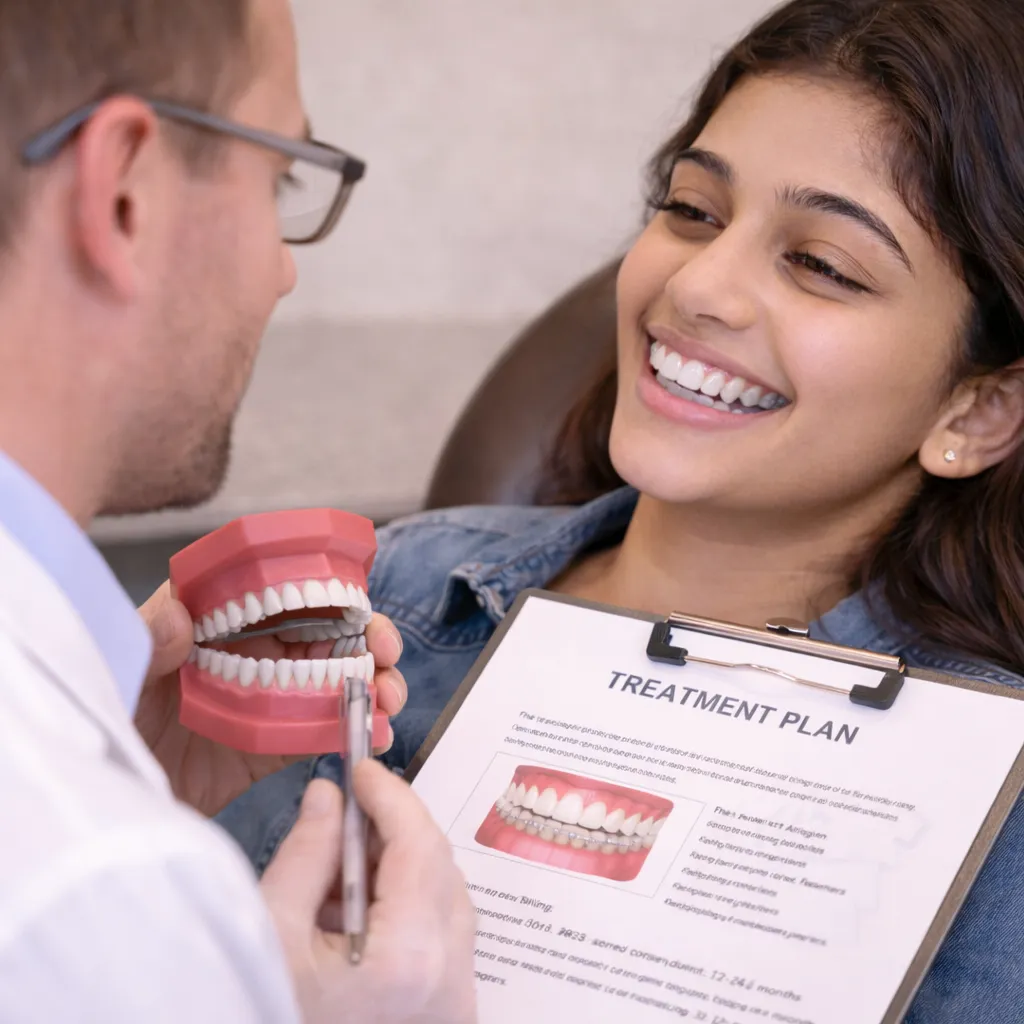
The orthodontist designs a customized treatment plan and recommends the most suitable type of braces and duration.
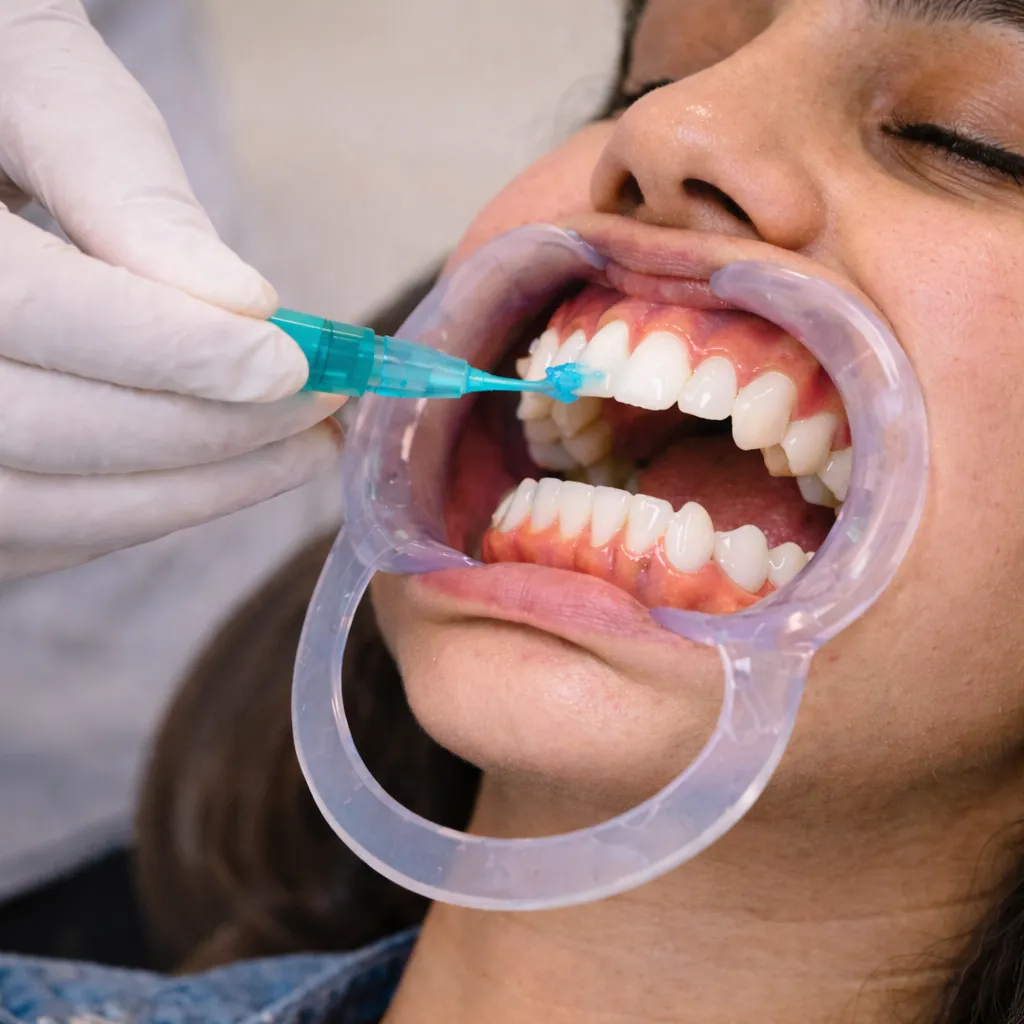
Before placing braces, teeth are professionally cleaned and polished to ensure proper bonding of the brackets.
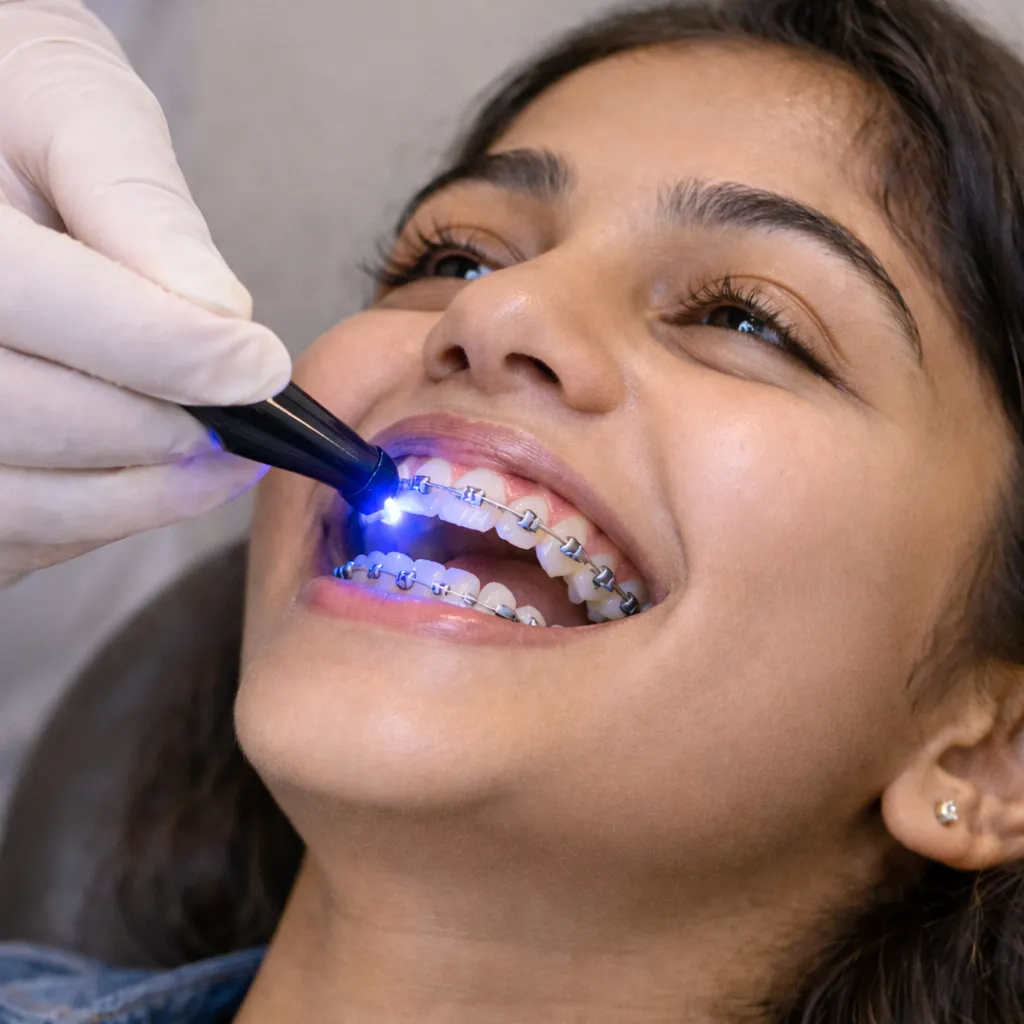
Brackets are precisely bonded to the teeth, and an archwire is engaged to begin controlled and gradual tooth movement.
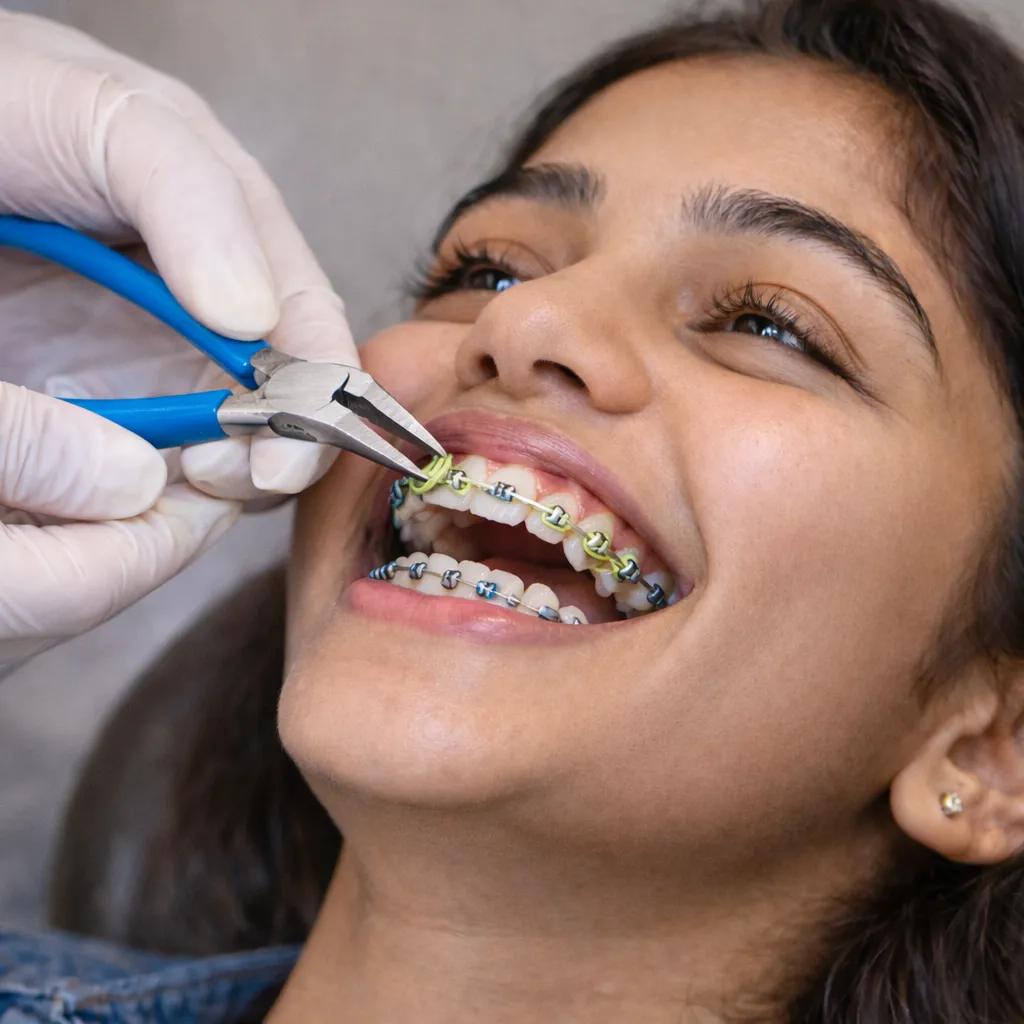
Follow-up visits every 4–6 weeks help monitor progress and adjust the wire for continued alignment.
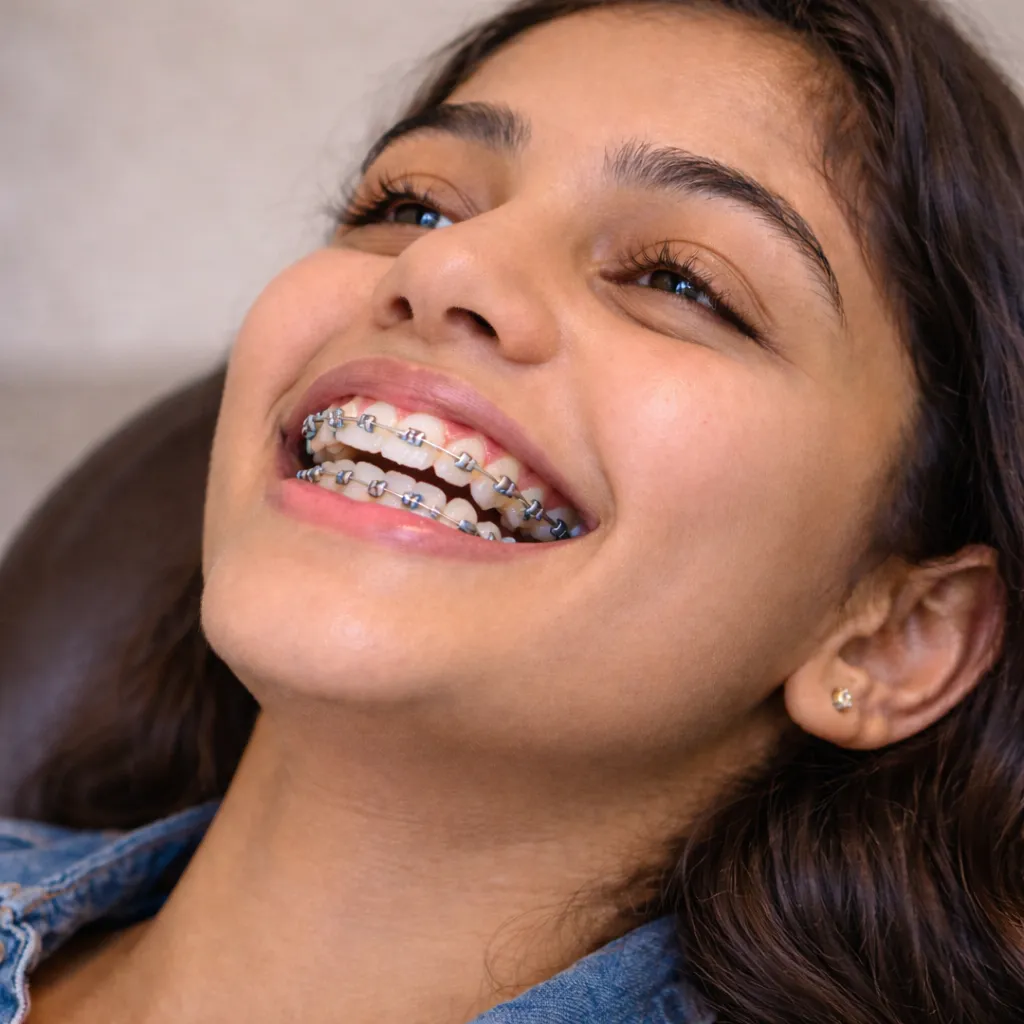
Teeth gradually shift into correct position and the bite is improved over time.
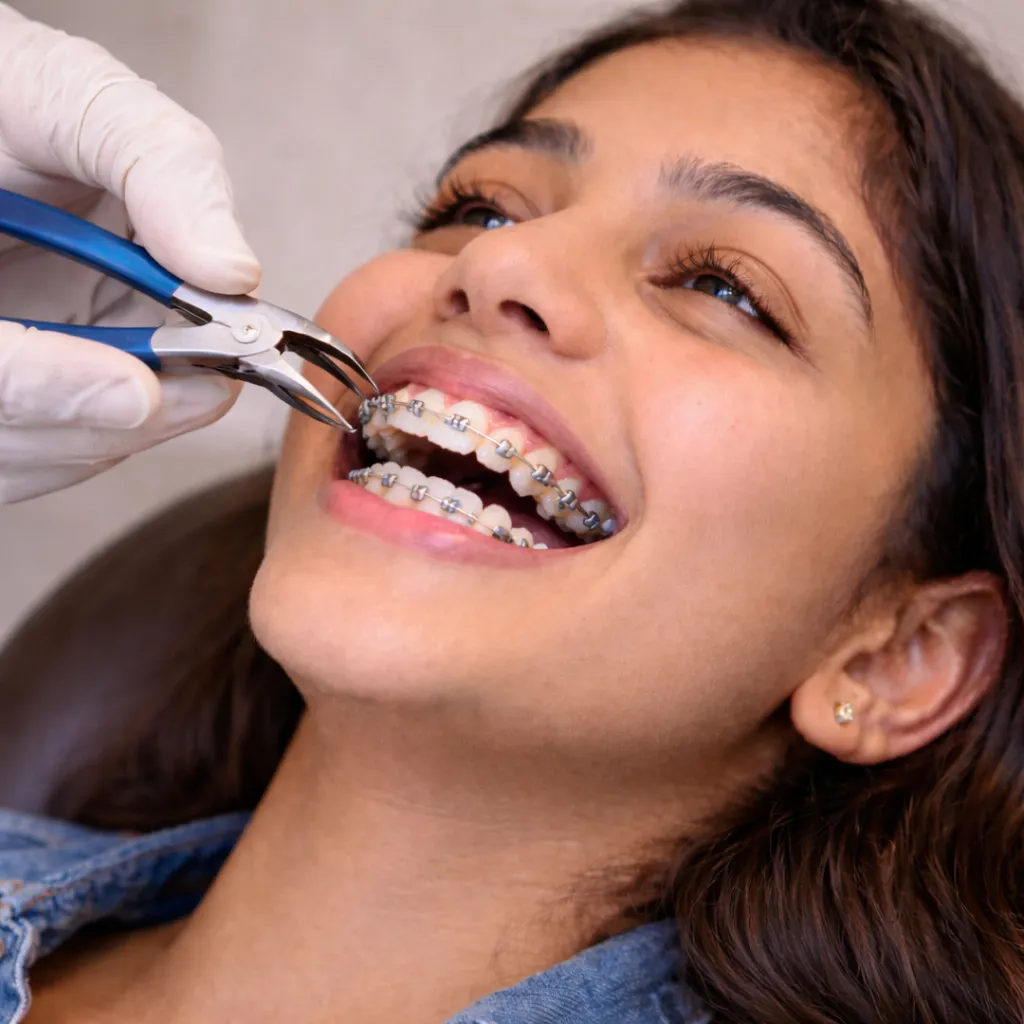
After achieving proper alignment, the braces are safely removed and teeth are polished.
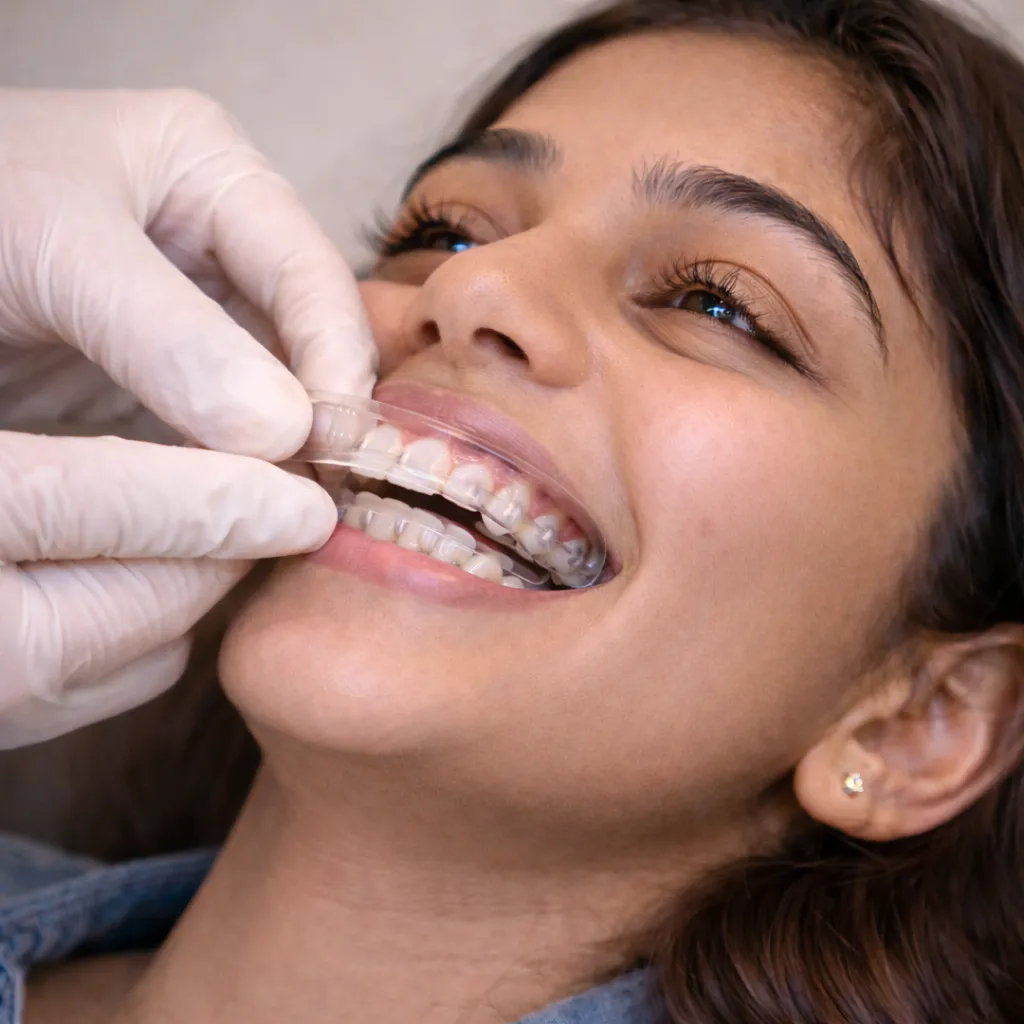
A custom retainer is provided to maintain the new alignment and ensure long-term stability.
Frequently Asked Questions
Everything you need to know before and after your dental treatment.
Is dental treatment painful?
No. We use modern techniques and gentle procedures to make treatments as comfortable as possible. Most patients feel little to no pain during treatment.
How often should I visit the dentist?
It is recommended to visit the dentist every 6 months for a routine checkup and cleaning to maintain good oral health and detect problems early.
Are Teeth Extracted For Orthodontic Treatment?
Not always. Extraction is only needed if there’s severe crowding or lack of space for teeth alignment.
What to avoid eating with braces?
Avoid hard or sticky foods like nuts, chewing gum, caramel, and hard candy to prevent damage.
How can I book an appointment?
You can schedule your appointment online at dentalplusdelhi.com/make-an-appointment, or reach us by calling 040‑4142 0000 or via WhatsApp at 8500779000 for quick assistance.
How Long Does It Take To Put Dental Braces On?
After bonding the dental braces, it takes about 1-2 hours to put on the dental braces for the teeth to finish.
Are Tooth Braces Painful?
You may experience some kind of discomfort or soreness after getting braces initially. This will go away soon. Although, if the pain persists, it is important to visit your orthodontist.
Will my speech be affected by my new braces?
You may experience slight changes in speech initially, but they will eventually subside in some time.
What safety measures are in place at Dentalplusdelhi?
Dentalplusdelhi adheres to the highest standards of clinical safety, including:
Advanced dental disinfection protocols
Class B autoclave sterilization
Use of disposable dental kits and PPE
HEPA air purification systems
Regular sanitization of treatment areas
Contactless check-in and digital records management
Your safety is our top priority at every stage of your visit.
What are Partha Dental clinic timings?
All Partha Dental clinics operate 7 days a week, from 9:00 AM to 9:00 PM, ensuring convenient access for all patients.